Economic Gangsters: Corruption, Violence, and the Poverty of Nations by Raymond Fisman Edward Miguel
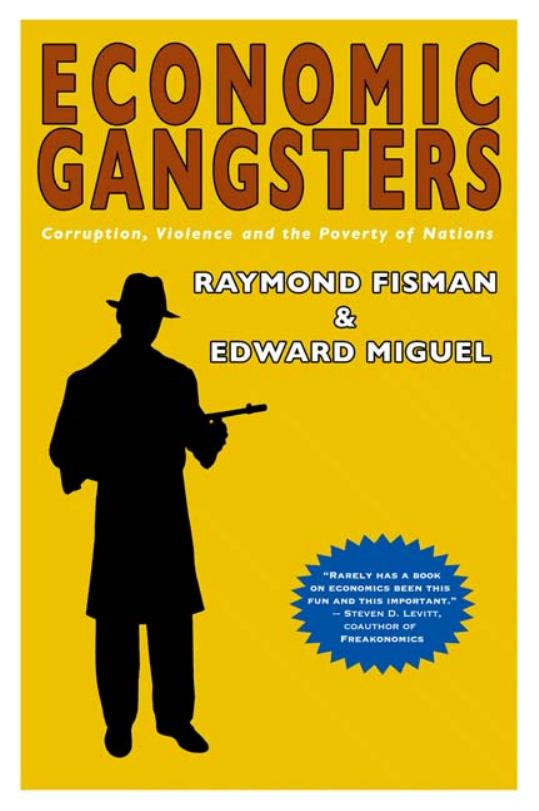
Author:Raymond Fisman, Edward Miguel
Language: eng
Format: epub, pdf
Published: 2016-12-06T16:00:00+00:00
When rains fail, so do the crops, and in an agrarian society, as the harvest goes, so goes the economy. That’s clear enough. More remarkably, though, we also find a very strong relationship between drought and civil conflict in Africa. An armed civil conflict is much more likely the year after a large rainfall drop than in normal years. Since droughts cannot possibly be caused by civil war, we can be confident that civil wars are more likely to occur after major economic shocks like droughts rather than vice versa.
Drought and the resulting economic hardship turn out to matter a lot for understanding African conflict. A 1 percent decline in national GDP increases the likelihood of civil conflict by about 2 percentage points. So an income drop of 5 percent—a large but altogether common deterioration in economic conditions, especially when the rains fail—increases the risk of civil conflict in the following year to roughly 30 percent, up from an already high average probability of conflict of around 20 percent in normal rainfall years. Just imagine living in a place where next year there is nearly a one in three chance that you’ll be living in a war zone. Never mind that your crops have failed, so you already have your hands full just finding your next meal.
Another striking finding emerges from the analysis. Political and social factors don’t seem to dampen the core role of economic shocks in generating violence. African countries are equally at risk of violence after droughts whether they are democracies or dictatorships, ethnically homogeneous or split by tribal and religious divisions, or socialist or capitalist in their economic policies. Poverty increases the risk of armed conflict for all Africans.
While economic desperation is not the only cause of armed violence in Africa, it’s remarkably important. Based on our calculations, African countries may have as much as 50 percent more risk of war (the jump from roughly 20 percent to 30 percent above) in years of economic recession than in other years. Other factors surely matter—ethnic divisions in some places and political oppression in others. And while we can’t make more rain fall, smoothing out the ups and downs of African incomes would be a major step forward in our fight against the continent’s wars.
In theory, the farmers themselves could take steps to iron out the highs and lows of the annual harvest cycle. After all, that’s the purpose of an insurance policy; you would pay a premium at the beginning of the planting season to guarantee some minimal level of income even if the rains never come. Or if crops fail, you could just take out a bank loan that you’d pay back in a better harvest year. But formal insurance policies and banking institutions are almost unknown in African villages. There are very few banks in the African countryside, in large part because farmers don’t have collateral assets they can put up to secure loans.
A little neighborly assistance could also serve as insurance against a bad year.
Download
Economic Gangsters: Corruption, Violence, and the Poverty of Nations by Raymond Fisman Edward Miguel.pdf
This site does not store any files on its server. We only index and link to content provided by other sites. Please contact the content providers to delete copyright contents if any and email us, we'll remove relevant links or contents immediately.
| Anthropology | Archaeology |
| Philosophy | Politics & Government |
| Social Sciences | Sociology |
| Women's Studies |
Cecilia; Or, Memoirs of an Heiress — Volume 1 by Fanny Burney(32558)
The Great Music City by Andrea Baker(32019)
Cecilia; Or, Memoirs of an Heiress — Volume 2 by Fanny Burney(31956)
Cecilia; Or, Memoirs of an Heiress — Volume 3 by Fanny Burney(31942)
We're Going to Need More Wine by Gabrielle Union(19046)
All the Missing Girls by Megan Miranda(16028)
Pimp by Iceberg Slim(14508)
For the Love of Europe by Rick Steves(14121)
Bombshells: Glamour Girls of a Lifetime by Sullivan Steve(14075)
Talking to Strangers by Malcolm Gladwell(13370)
Norse Mythology by Gaiman Neil(13365)
Fifty Shades Freed by E L James(13241)
Mindhunter: Inside the FBI's Elite Serial Crime Unit by John E. Douglas & Mark Olshaker(9343)
Crazy Rich Asians by Kevin Kwan(9292)
The Lost Art of Listening by Michael P. Nichols(7506)
Enlightenment Now: The Case for Reason, Science, Humanism, and Progress by Steven Pinker(7313)
The Four Agreements by Don Miguel Ruiz(6765)
Bad Blood by John Carreyrou(6621)
Weapons of Math Destruction by Cathy O'Neil(6280)
